
Uncategorized
Planting a Bare-Root Hedge in Early November as a Slow Garden Project: What the RHS and the Woodland Trust Say About the November to March Window, Spacing, Heeling In, the First Cut and When Not to Trim for Nesting Birds
Nov
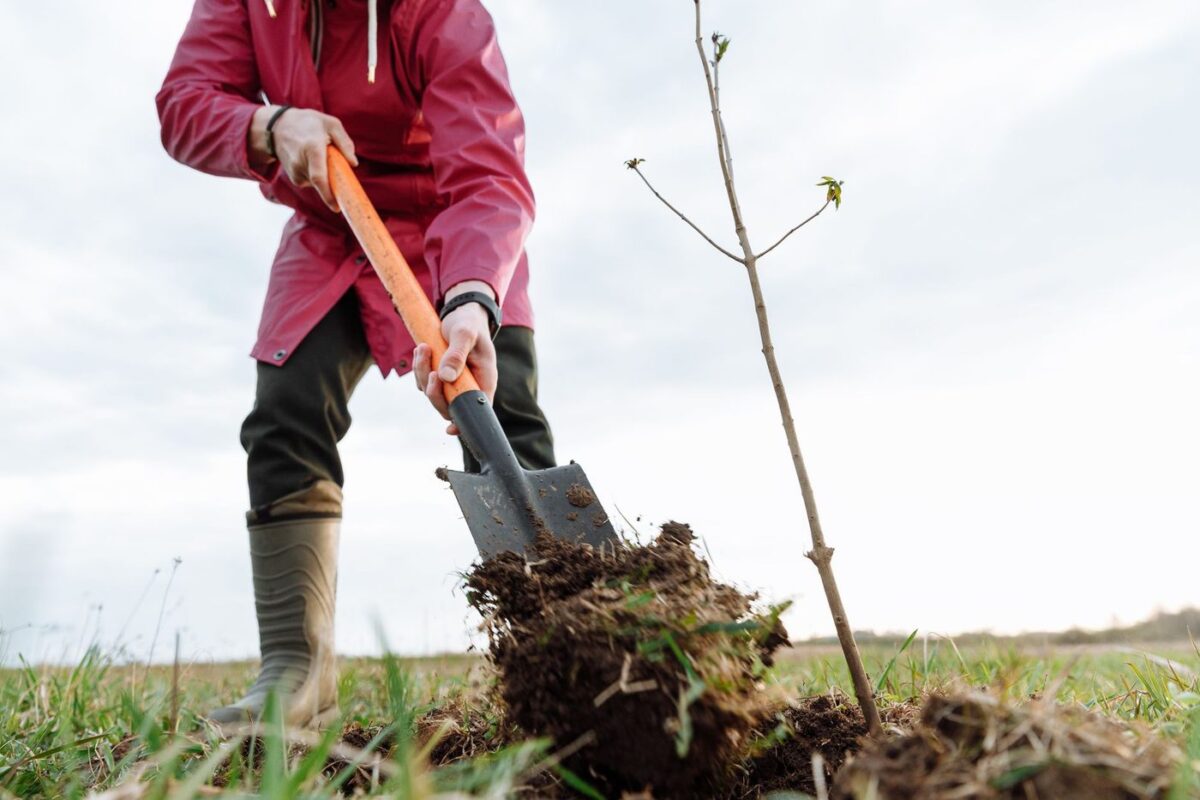
Bare-root hedging arrives as leafless young plants with no soil around the roots, and the planting window for it opens in late autumn. The RHS describes planting a bare-root wildlife hedge as a job for late autumn to late winter, November to February, while the Woodland Trust gives November to March. This article sets out what the two pages say about the routine, where they differ, and what the Woodland Trust says about trimming and nesting birds. It is a slow outdoor job described as the pages describe it, with no claims about any effect on health or mood. Both pages are undated and were read on 7 November 2026.
A planting routine, in order
- Time the delivery. The RHS says bare-root hedging is usually sold in bundles of ten or more and, with no soil around the roots, needs planting soon after arrival. The Woodland Trust advises ordering saplings to arrive when planting is possible.
- Hold the plants if the site is not ready. The RHS says to put the roots in a container of moist compost or heel them into the ground temporarily. The Woodland Trust says to keep the roots moist or, for longer delays, lay the roots of each tree in a trench in a sheltered spot and backfill with soil, which it calls heeling in.
- Prepare the strip. The RHS says to clear large perennial weeds and, where soil is poor, dig in organic matter such as well-rotted garden compost. The Woodland Trust says to remove weeds and roots and, if possible, mulch with organic matter such as bark.
- Space and plant. Figures differ between the pages and are set out below. The RHS says to plant just the roots, not the stem, firm gently and water to settle in.
- Keep the roots from drying. The RHS says that after a dry autumn and winter the hedge will need occasional watering, and that in spring a mulch about 8cm deep should be spread, leaving a slight gap so it does not touch the stems.
Where the two pages differ
The RHS gives 30 to 60cm between plants, depending on size and vigour, and for a wider hedge a staggered double row 45cm apart with 90cm between plants. The Woodland Trust says a single hedge should have shrubs 30cm apart in a line, and for a double row a zig-zag pattern of five plants per metre with a 30 to 40cm gap between plants, plus a tree every 6m protected with a tube and stake. The pages also give different end dates for planting (February and March respectively), and neither says which governs.
The Woodland Trust adds that if a hedge borders a neighbour’s land it should be planted about 1 to 1.5m from the boundary line so it can grow without overhanging, and that it is a good idea to discuss it with the neighbour first. It says new plants will most likely arrive as bare-rooted whips 20 to 90cm tall, so it is not unusual for them to look small and twig-like.
The first cut
The RHS says that after planting the main shoot should be cut back by about one third to encourage bushy growth, repeated in the second winter, when each side branch is also cut back by a third. The Woodland Trust describes a different pattern: allow the hedge to establish for at least a year, then in the following spring cut the shrubs just above a bud so they are around 60cm tall, and leave it to settle for another two years before regular trimming. These are two separate sets of advice, and the pages do not say which suits a given hedge.
Later trims and nesting birds
The Woodland Trust says it is best not to cut an established hedgerow every year, that cutting every two to three years is ideal for increasing flowers and berries, and that many native hedgerow shrubs flower and fruit on the previous year’s growth. It gives the hedge-cutting season as October to February, since cutting from March to September may disturb nesting birds, and says cutting in autumn reduces the fruit available to overwintering birds. It also says that under the Wildlife and Countryside Act 1981 it is an offence to damage or destroy the nest of any wild bird while it is being built or in use. The RHS says a deciduous mixed hedge is usually trimmed in late summer but responds well to hard cutting in winter if a year or two is missed, and that allowing it to grow up to 1.8 to 2.4m tall maximises flowering and fruiting. The two pages give different timings for trimming (late summer as the RHS describes the usual practice, October to February as the Woodland Trust gives the season), and neither says which suits a given hedge.
The bottom line
For a bare-root hedge, the RHS and the Woodland Trust both place planting in the dormant season, from November (the RHS ends in February, the Woodland Trust in March), both give a way to hold plants until the ground is ready, and both give spacing, though with different figures. The RHS cuts back by a third after planting and again in the second winter, while the Woodland Trust waits a year and then cuts to about 60cm. The Woodland Trust gives October to February as the cutting season and notes the offence relating to nests in use, and both pages are undated.
Sources
- Plant a bare root mixed wildlife hedge, Royal Horticultural Society, page undated, read 7 November 2026 (rhs.org.uk)
- How to plant and maintain native hedges, Woodland Trust, page undated, read 7 November 2026 (woodlandtrust.org.uk)

 English
 French