
Style
Lomilomi: Hawaiian bodywork, its lineages and the spa version
Oct
Lomilomi (often written lomi lomi outside Hawaiʻi) is the massage tradition of Native Hawaiians. The word comes from lomi, “to knead”, and the practice is far wider than the long, flowing, oiled strokes that international spas sell under the name. This guide describes the tradition as Hawaiian sources themselves present it, explains how the spa version came about and how it differs, and sets out what to agree with a practitioner about draping, pressure and boundaries before a session with so much broad, continuous contact.
Origins: a family and healing practice
In pre-contact Hawaiʻi, lomilomi was practised in every household, passed from elders (kūpuna) to the next generation, and used to aid digestion for chiefs, ease the soreness of warriors and farmers, shape and strengthen newborns, and comfort the old. Specialist healers, kāhuna lomilomi, trained for many years and treated the whole person, with prayer (pule) and a spiritual framework as part of the work. Methods varied by island, district and family, so there has never been one standard lomilomi.
Two legal moments shaped its modern history. In 1947 the Territory of Hawaiʻi created a Board of Massage whose written examination many traditional healers could not or would not take, pushing lomilomi partly out of public view. Decades later the state recognised the tradition: Hawaiʻi’s medical practice statute (HRS §453-2) now exempts traditional Hawaiian healing by practitioners certified through a council convened by Papa Ola Lōkahi, the Native Hawaiian health organisation, following laws passed in 1998, 2001 and 2005.
The best-known teacher outside the family setting was Margaret Kalehuamakanoeluluʻonāpali Machado, “Aunty Margaret”, a kupuna on the Kona coast of Hawaiʻi Island who learned from her grandfather and, from the 1970s, taught multi-week courses at her home that drew students from across the United States, Europe and Australia. Many of the lomilomi lineages now taught internationally trace to her classes. She described the work as prayer done with loving hands.
What a session involves
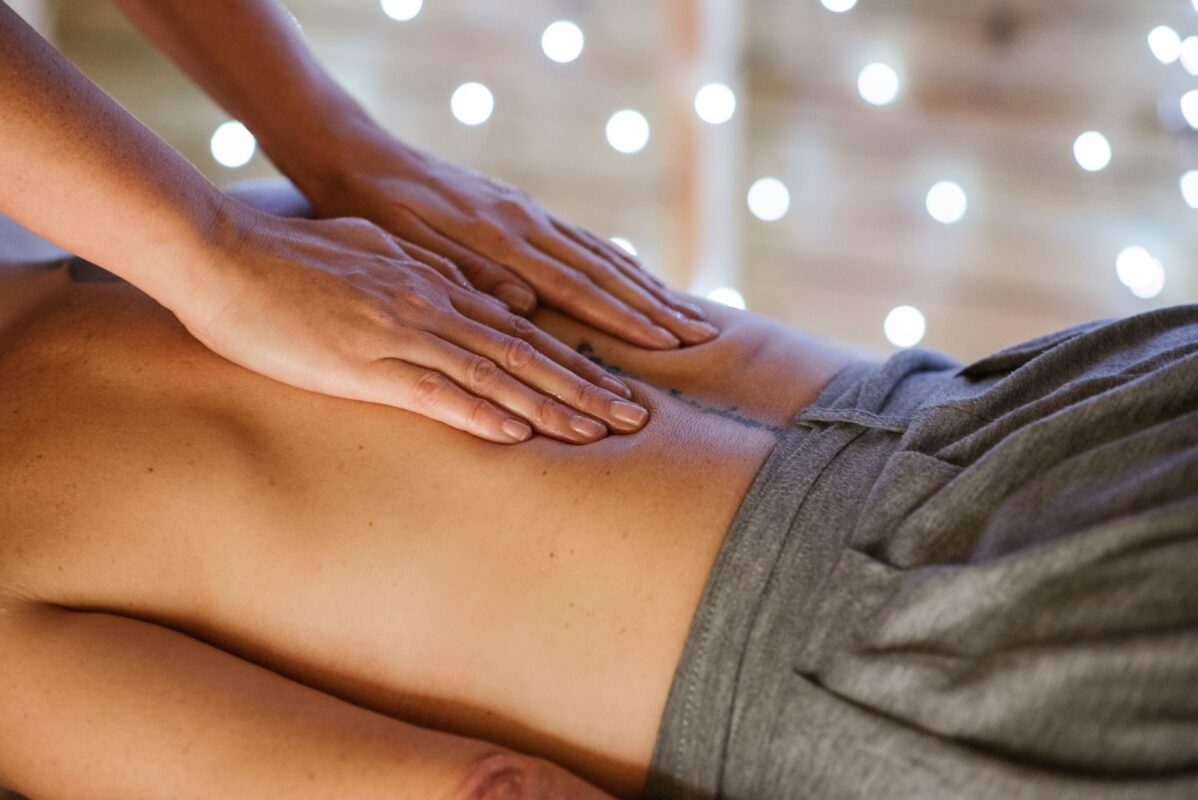
A traditional session may begin with a conversation, a prayer or a moment of quiet, and may be adapted to what the practitioner finds. A spa session is more predictable: 60 to 90 minutes on a table, generous oil, and long strokes that run the length of the body, often with the forearm, in a continuous rhythm likened to ocean waves. The therapist may work both sides of the body at once, move around the table a great deal, and use gentle stretches and rocking. Because strokes are long and connected, draping is lighter and more mobile than in a Swedish massage, which is why boundaries need to be agreed in advance.
Before the session, discuss: which areas are included and excluded, how draping will be managed, whether forearm or body-weight pressure will be used, and whether any spiritual elements are part of the practitioner’s approach and whether you want them.
Key techniques
- Long forearm strokes running from shoulder to foot or hip to shoulder in one movement.
- Rhythmic rocking of the body.
- Palm and fingertip kneading of specific areas.
- Gentle stretches and joint movement.
- Continuous contact, with one hand always on the body.
Flow describes rhythm and continuity; it is not a licence to sweep across areas you have excluded, and a respectful practitioner will keep to the agreement.
Who tends to choose it
People who want an enveloping, rhythmic full-body experience rather than focused work on one spot; people drawn to the cultural and spiritual context; and anyone who finds segmented, stop-start massage unsatisfying. If you prefer clearly defined strokes with fixed draping, Swedish massage explained describes the alternative, and our massage comparison guide covers others.
Suitability, contraindications and red flags
Lomilomi carries the standard full-body cautions: seek advice first if pregnant, if you have a clotting disorder, take anticoagulants, have osteoporosis, reduced sensation, lymphoedema or active cancer treatment, and postpone for fever, infectious illness, broken skin or recent injury. Specific to this style:
- Forearm and body-weight pressure can be heavy; ask for it to be moderated over the lower back, ribs and abdomen, and declined entirely over the kidneys, the spine, the front of the neck and any area that hurts.
- Abdominal work is traditional in some lineages; decline it in pregnancy, after abdominal surgery, with digestive disease or if you simply do not want it.
- Stretches and rocking should be gentle; refuse them with joint hypermobility, recent injury or a joint replacement.
- Draping and consent. You can change the agreement at any point in the session, and a practitioner who treats “flow” as a reason to ignore a boundary is one to leave. Our guide to choosing a qualified massage therapist lists the questions to ask, which apply equally to cultural authenticity: ask who the practitioner trained with and for how long.
Stop for sharp or spreading pain, pressure on bone, dizziness, or any contact you did not agree to. However enveloping the session, it is not a reason to delay having a persistent symptom assessed.
Why this is not a home technique
Lomilomi is a cultural practice learned over years from a teacher, and its distinctive element, long forearm strokes using the practitioner’s body weight on another person, is exactly the thing an untrained person should not attempt from a written description. A short online routine cannot teach it, and claiming otherwise disrespects the tradition. If you want a flowing self-massage, a few unbroken, light palm strokes along your own thigh give you the rhythm without the risk; leave partner work with forearms and body weight to trained hands.
Frequently asked questions
Is spa lomi lomi “real” lomilomi?
It is a real massage style derived from the tradition, usually through lineages taught to non-Hawaiians since the 1970s, but it is not the same as the healing practice of a kahuna lomilomi, and good practitioners say so.
Will there be prayer or chanting?
Some practitioners include a short pule; you can ask beforehand and opt out.
How undressed will I be?
Usually fully undraped except for a small covering, because of the long strokes; agree what you are comfortable with and the therapist should adapt.
Can I learn it on a weekend course?
You can learn some strokes; Hawaiian practitioners are clear that the tradition itself takes years and a teacher.
Educational information, not medical advice. For actual pain, persistent or unexplained symptoms, injury, or anything that worries you, seek assessment from a qualified health professional before trying or receiving massage. Stop any technique that causes pain.
Sources
- Kumukahi (Hawaiʻi), Mauli Ola unit, “Lomilomi” (traditional uses, practitioners, Aunty Margaret Machado’s teaching)
- Wikipedia (and cited references), “Lomilomi massage”: Chai, R. Makana Risser, Nā Moʻolelo Lomilomi: The Traditions of Hawaiian Massage and Healing, 2005; 1947 Board of Massage; 2001 Act 304
- Hawaiʻi Revised Statutes §453-2(c) (exemption for traditional Hawaiian healing practitioners certified by a kupuna council convened by Papa Ola Lōkahi; Acts 162 of 1998, 304 of 2001, 153 of 2005), Justia 2024 compilation
- Ke Ola Magazine (Hawaiʻi Island), “The life in business: Dragonfly Ranch”, 2010 (student of Margaret Machado, 1974)
- Coffee Times (Kona, Hawaiʻi), “Lomilomi” (Margaret Machado, her grandfather John Au, international students)
- Honolulu Star-Advertiser, feature on the Hawaiian Lomilomi Association (Margaret Machado as mentor)

 English
 French