
Style
Abhyanga: the Ayurvedic warm-oil massage, explained
Oct
Abhyanga (Sanskrit, roughly “oil massage” or “anointing with oil”) is the full-body warm-oil massage of Ayurveda, the traditional medical system of India. In an Ayurvedic setting it sits inside a wider framework of diet, routine and herbal preparations; on an international spa menu it usually appears as a slow, rhythmic, generously oiled treatment. This guide explains the tradition, what a session looks like in practice, and where the boundary lies between a classical description and modern evidence.
Where abhyanga comes from
Oil massage is described in the classical Sanskrit medical compendia: the Charaka Samhita and Sushruta Samhita, compiled over the early centuries CE, and the later Ashtanga Hridaya attributed to Vagbhata. In those texts it belongs to snehana (oleation) and to dinacharya, the recommended daily routine, which is why Ayurvedic teachers describe it as something to do for yourself each morning as well as something to receive from a practitioner. Sesame oil is the classical base, often infused with herbs; coconut oil is the usual warm-weather alternative in southern India. The texts also list situations in which oleation is withheld, including indigestion, fever and the period straight after cleansing therapies, so even in its own tradition it has never been “for everyone, always”.
Two cautions about history. First, Ayurveda is a living tradition rather than a single frozen text, and the way abhyanga is taught today varies between lineages, institutions and countries. Second, the benefits listed in classical sources (strength, resilience, slower ageing) are traditional claims; they have not been established by controlled clinical trials, and this article does not present them as medical facts.
What a session involves
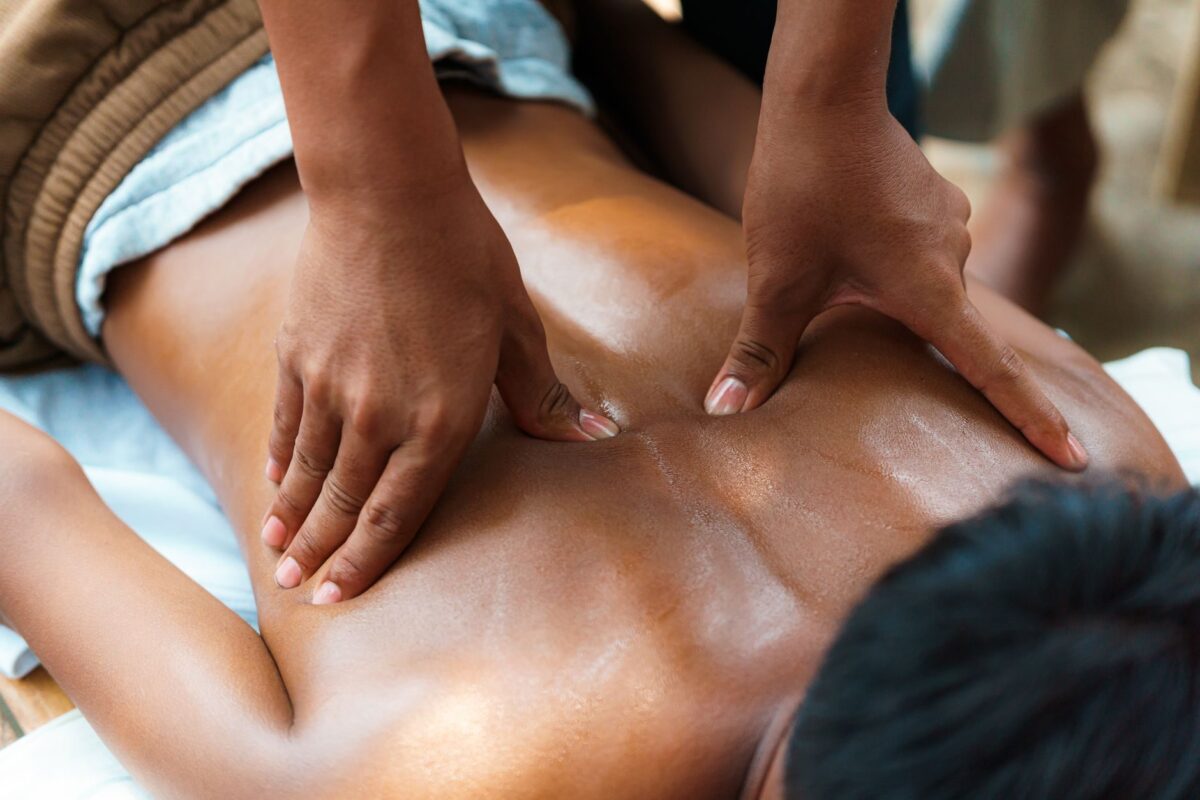
A practitioner session typically lasts 45 to 90 minutes and uses far more oil than a Western relaxation massage. The oil is warmed, usually in a bain-marie or dedicated warmer, and poured or spread over the body before long, rhythmic strokes along the limbs and circular work over the joints. Some practitioners follow a set sequence (head and feet are given particular attention in the Ashtanga Hridaya); others adapt to the person. Many clinics finish with a steam or warm shower to remove excess oil, and some pair abhyanga with shirodhara, a separate treatment in which warm oil is streamed over the forehead.
Expect to be asked about skin sensitivity, allergies, recent illness and pregnancy, and expect to be told which oil is in use. If an unscented, non-herbal oil suits you better, say so before the session begins.
Key techniques you will feel
The defining qualities are rhythm, warmth and continuity rather than depth. Strokes tend to run lengthwise along long bones and in circles over shoulders, hips and knees. Pressure is generally light to medium; abhyanga is not a deep-tissue style and should not leave you sore. In many lineages the therapist works with both hands symmetrically, and in some clinics two therapists work in mirror image.
Who tends to choose it
People drawn to abhyanga usually want a slow, enveloping, warm experience rather than targeted work on a specific knot. It appeals to those already interested in Ayurvedic routines, to people who find dry-skin discomfort in cold months, and to anyone who simply prefers an oil-rich treatment. If you dislike feeling oily, or your skin reacts to plant oils, a different style from our massage comparison guide will suit you better.
Suitability, contraindications and red flags
Abhyanga shares the general cautions of any massage: speak to a health professional first if you have a clotting disorder, take blood thinners, are being treated for cancer, have fragile bones or reduced sensation, or are pregnant. Oil-specific issues matter too. Sesame, almond and coconut are recognised allergens; sesame became a legally declared major allergen in the United States in 2023, which gives a sense of how common that sensitivity is. Herbal oils may contain ingredients you have never been exposed to, so ask for the full list. Postpone a session if you have a fever, an active skin infection or broken skin, and do not accept a treatment that feels hot rather than warm. Ayurvedic practitioners may also decline to oil you straight after a heavy meal or during acute digestive illness, which is consistent with the classical texts.
Stop the session for: burning or stinging under the oil, a rash appearing during the session, dizziness on standing, or any sharp or spreading sensation; these can have several causes and need checking rather than working through. Nor should a warm-oil routine be used to put off getting a persistent or unexplained symptom looked at.
Trying warm-oil massage safely at home
Self-abhyanga is part of the tradition, and a light version is reasonable for healthy adults. Keep it simple:
- Patch-test any new oil on a small area of the inner forearm beforehand, and wait as long as the product label or a pharmacist advises before using it more widely (a common precaution, not a guarantee against reaction); many massage oils are nut- or seed-based.
- Warm the bottle in a bowl of hot water, not in a microwave, which creates hot spots that can burn skin.
- Sit on a towel on a non-slip surface. Apply a small amount to one forearm or lower leg and use slow, light strokes towards the body, then gentle circles over the elbow or knee.
- Avoid the front of the neck, the abdomen if you are pregnant, broken or irritated skin, and any area that hurts.
- Wipe the floor and bath before standing; oil underfoot causes falls.
- Wash oily towels on a hot cycle and never put them in a tumble dryer: oil-soaked fabric can self-heat and ignite. Our fire-safety guide for candles and oil burners covers the wider point.
Keep it short and stop while it still feels pleasant. For a hands-only alternative without oil, the five-minute hand and palm routine is a good starting place. If you want to add scent, read our guide to using essential oils safely first; abhyanga does not require fragrance.
Frequently asked questions
Is abhyanga the same as aromatherapy massage?
They are different things that happen to share oil. Aromatherapy is defined by essential oils; abhyanga is defined by its Ayurvedic context and may use a plain or herb-infused base with no added fragrance at all.
Does it “detox” the body?
That is a modern marketing phrase, not a classical claim and not an established physiological effect. Enjoy the treatment for how it feels, not for a promised internal cleanse.
Do I need a dosha assessment first?
Ayurvedic clinics will often offer one and choose the oil accordingly. A spa version may skip it. Neither approach makes the oil safer or less safe for your skin; your allergy history does.
How oily will I be afterwards?
Quite oily. Bring clothes you do not mind marking, and ask whether a shower or steam is included.
Educational information, not medical advice. For actual pain, persistent or unexplained symptoms, injury, or anything that worries you, seek assessment from a qualified health professional before trying or receiving massage. Stop any technique that causes pain.
Sources
- Charaka Samhita, Sutrasthana (classical Ayurvedic text; Charaka Samhita Online project edition, Snehana and daily-regimen chapters)
- Ashtanga Hridaya of Vagbhata, Sutrasthana (classical Ayurvedic text; oleation indications and contraindications)
- World Journal of Pharmaceutical Research, review of abhyanga within dinacharya, 2022
- U.S. Food and Drug Administration, “FASTER Act: sesame becomes the ninth major food allergen”, 2023
- National Center for Complementary and Integrative Health (USA), “Massage therapy: what you need to know”, 2019

 English
 French