
Uncategorized
Relaxation Exercises for People Who Dislike Meditation
Sep
If you have tried meditation and found it frustrating, boring or actively unpleasant, you are in good company, and there is nothing wrong with you. Sitting still and observing your thoughts suits some people very well and others not at all. Relaxation is a much broader field than meditation. This guide covers approaches built on movement, surroundings, sound and absorbing activity, none of which ask you to close your eyes and watch your mind.
It is normal for meditation not to suit you
The NHS says that many people find mindfulness helpful, but it is not right for everyone: some people find that it does not help them, or that it can make them feel worse. The US National Center for Complementary and Integrative Health cites a 2020 review of 83 studies in which researchers concluded that about eight per cent of participants had a negative effect from practising meditation, most commonly anxiety and depression. So disliking it is neither unusual nor a personal failing. It is simply a poor fit, and there are plenty of others.
Movement-based options
One way to settle the mind is to occupy the body. The NHS lists being physically active as one of its five steps to mental wellbeing, and notes in its mindfulness guidance that some people find it easier to cope with an over-busy mind if they are doing gentle yoga or walking.
- Walking. An unhurried walk with no destination and no podcast. Let your attention rest on what you can see and hear.
- Tai chi and yoga. The NHS notes that both can help with developing awareness of your breathing, which makes them a way into calmer breathing without sitting still. See our beginner guides to tai chi and yoga.
- Gentle stretching. A few minutes of slow stretching, particularly after long spells at a desk. Our desk stretches and micro-breaks guide has a simple set.
- Rhythmic activity. Swimming, cycling at an easy pace, or raking leaves. Some people find repetitive movement steadying.
Body-based options that are not meditation
The National Center for Complementary and Integrative Health describes several relaxation techniques that give you something to do, not something to observe.
- Progressive muscle relaxation. Tensing different muscles and then releasing the tension. It is active and structured, which suits people who find stillness difficult. Our step-by-step guide explains how.
- Guided imagery. Picturing scenes or events associated with calm and trying to produce a similar feeling in your body. Some people who dislike watching their thoughts enjoy directing them instead.
- Slow breathing. A few minutes of unforced breathing to a steady count. See comfortable diaphragmatic breathing.
Surroundings and senses
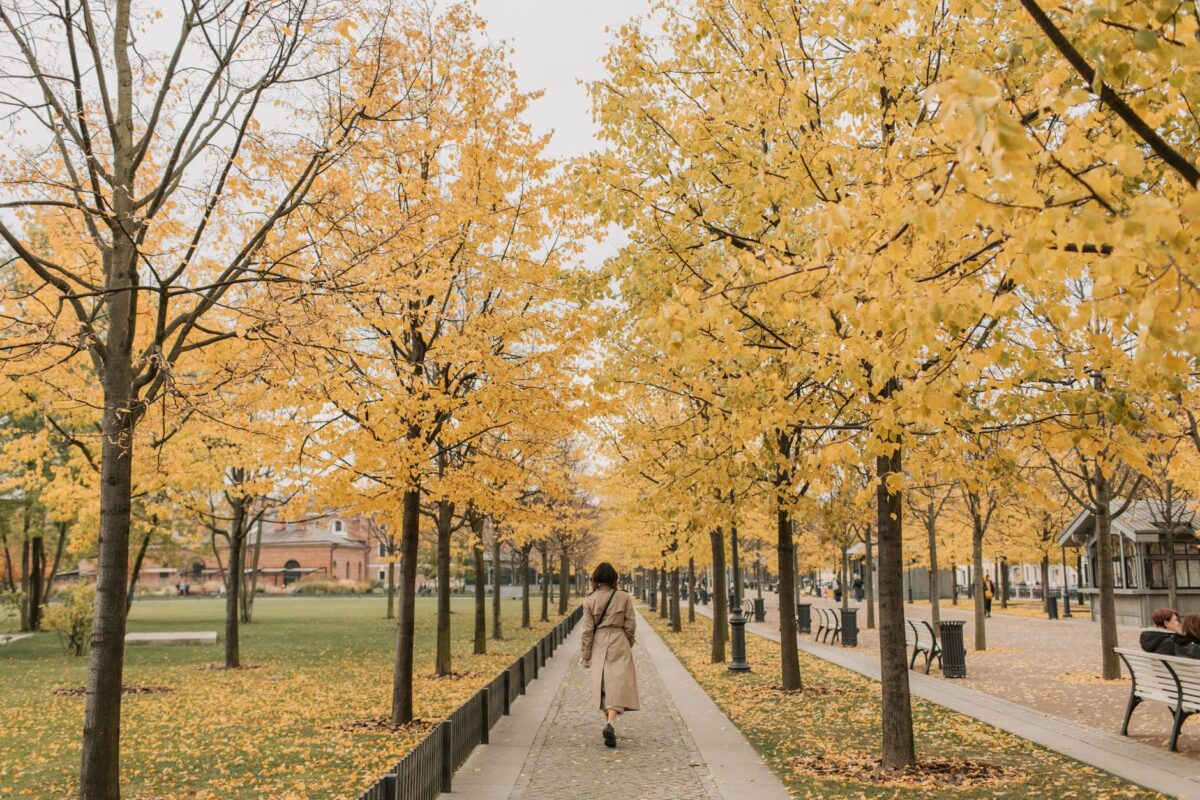
- Time outdoors. A park, a garden or a tree-lined street. Our article on nature and mental health looks at why green space helps.
- Music and sound. Listening properly to music you know well, without doing anything else. See using audio to calm down.
- The five-senses exercise. An outward-facing alternative to a body scan: notice five things you can see, four you can touch, three you can hear, two you can smell and one you can taste. Our guide to 5-4-3-2-1 grounding explains it.
Absorbing activities
Many people relax most easily when they are absorbed in a task that holds their attention without straining it. The NHS includes learning new skills among its five steps to mental wellbeing, and suggests it can boost self-confidence and give a sense of purpose. Cooking something new, gardening, drawing, knitting, playing an instrument, or repairing something all qualify. Our article on flow, hobbies and creativity explores why absorbing activities reduce stress.
Connection
The first of the NHS’s five steps is connecting with other people, which it says can help build a sense of belonging and self-worth and provide emotional support. A proper conversation, a shared meal or a walk with a friend is a legitimate way to relax, and for some people it works better than any solo technique.
Practical approaches
- Write it down. A list of what is on your mind and the next single action for each item.
- Tidy one small area. A cleared desk or kitchen counter is a finished task in a day of unfinished ones.
- Take real breaks. The Health and Safety Executive advises that short, frequent breaks from screen work are better than long, infrequent ones, and that breaks should let you get up and move around.
How to choose
| If meditation felt | Try |
|---|---|
| Boring | An absorbing hobby, music, or a walk somewhere new |
| Physically restless | Walking, tai chi, yoga or stretching |
| Too inward or unsettling | The five-senses exercise, time outdoors, or company |
| Too vague | Progressive muscle relaxation or a breathing count |
Give any new approach a fair trial of a week before judging it. Then keep what worked.
When to get help
If an exercise makes you feel worse, stop. Relaxation exercises are not right for everyone and do not replace mental-health care. If focusing on your breath or body leaves you more anxious or unsettled, switch to something outward-facing, such as noticing objects around you or taking a gentle walk, or simply stop. The NHS advises seeing a GP if you are struggling to cope with stress or the things you are trying yourself are not helping, and calling NHS 111 or asking for an urgent GP appointment if you need help urgently.
The bottom line
Meditation is one way to relax among many, and it does not suit everyone. Movement, time outdoors, music, absorbing hobbies, other people, and structured techniques such as progressive muscle relaxation are all well-established alternatives. The best method is the one you will actually do, and you are allowed to stop doing the ones that do not help.
Sources
- NHS, “Mindfulness”
- National Center for Complementary and Integrative Health, “Meditation and Mindfulness: Effectiveness and Safety”
- NHS, “5 steps to mental wellbeing”
- National Center for Complementary and Integrative Health, “Relaxation Techniques: What You Need To Know”
- Health and Safety Executive, “Working safely with display screen equipment: Work routine and breaks”
Last reviewed: 19 September 2026. This article is general information about everyday relaxation and is not medical advice.

 English
 French