
Style
Cupping therapy: history, what the marks mean, who should avoid it
Oct
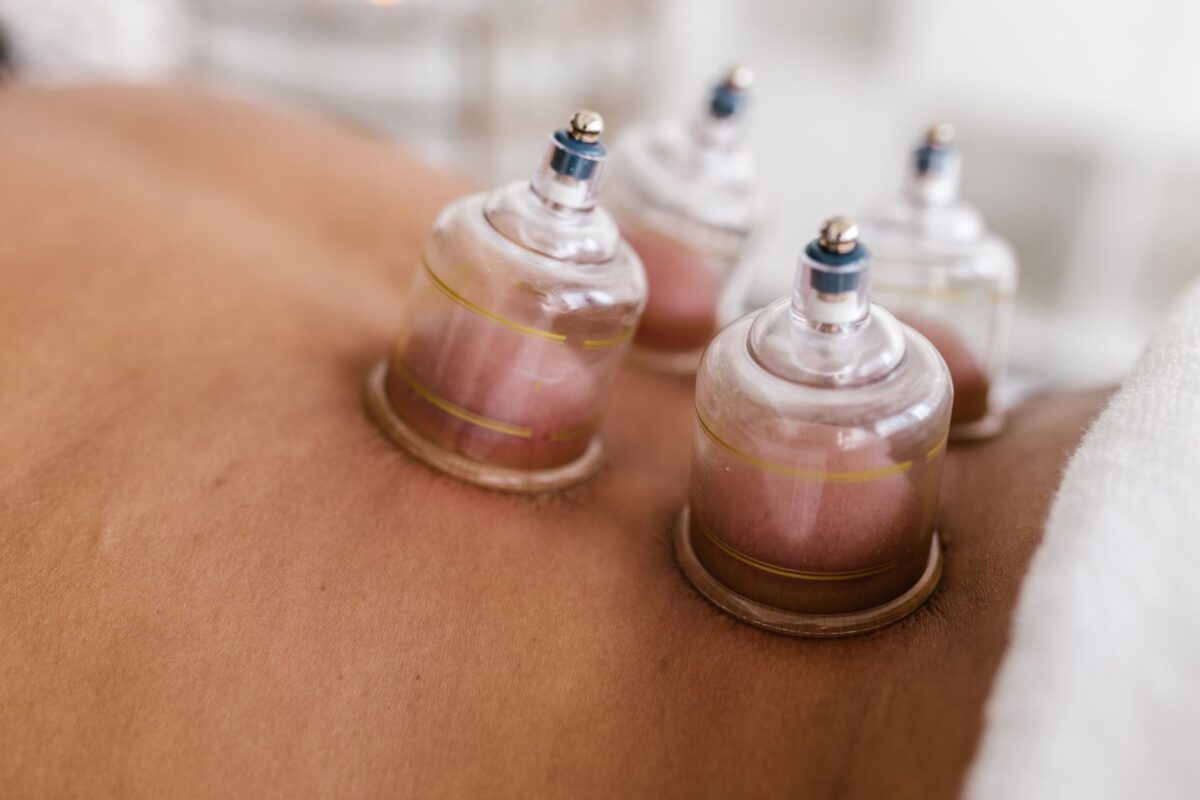
Cupping places cups on the skin and creates suction inside them, drawing the skin and underlying tissue upward. It appears on massage menus as “massage cupping” or “myofascial cupping”, in Chinese medicine clinics, and in Muslim communities as hijama. The circular marks it leaves became globally recognisable after swimmers and other athletes appeared with them at the 2016 Olympic Games. This guide explains where the practice comes from, how it is done, what the research says, who should avoid it, and why we do not give home instructions.
A history across several medical cultures
Cupping is one of the few techniques documented independently in several ancient traditions. The Ebers Papyrus, an Egyptian medical text dated to around 1550 BCE, describes bleeding by cupping. Greek physicians used it: it appears in the Hippocratic writings (fifth to fourth century BCE) and later in Galen. In China, the fourth-century physician Ge Hong documented cupping in his Handbook of Prescriptions for Emergencies, and it became a standard tool of Chinese medicine, usually with bamboo or glass cups. In the Islamic world it was adopted as hijama, described by physicians such as al-Razi, al-Zahrawi and Ibn Sina, and recommended in hadith literature; it remains a widespread religious and folk practice across Muslim-majority countries. Cupping was common in European medicine until the eighteenth and nineteenth centuries, when it faded along with bloodletting, and it returned to Western wellness settings largely through acupuncture clinics and sports therapy in recent decades.
What a session involves
A practitioner first assesses the skin and takes a health history. Suction is then created either by briefly heating the air inside a glass cup with a flame before placing it (fire cupping) or, more commonly today, with a hand pump or flexible silicone cup. The cup may be left in place for as long as the practitioner judges appropriate (stationary cupping) or, with oil on the skin, slid along a muscle (moving or “massage” cupping). Dry cupping does not break the skin. Wet cupping, or hijama in its usual form, involves small cuts and the withdrawal of a small amount of blood; it is a minor invasive procedure with the infection risks that implies and is outside the scope of massage.
Expect circular reddish or purple marks that fade gradually; ask the practitioner how long to expect, and have any mark that blisters, breaks or is not fading checked. They are bruise-like discolouration from the suction, not evidence of “toxins” leaving the body.
Key techniques
- Stationary dry cupping: cups held still on the back, shoulders or thighs.
- Moving (massage) cupping: oiled skin, cup slid along the muscle; this is the form most massage therapists use.
- Flash cupping: cups applied and removed rapidly.
- Fire versus pump: both create suction; fire adds a burn risk and needs specific training.
Who tends to choose it
People with persistent muscular tightness who have found hands-on work insufficient, athletes following team-mates’ example, people from cultures where hijama is a normal part of health care, and the curious. Compare it with hands-on alternatives in our massage comparison guide before booking; in most cases a skilled therapist can address the same tissue without suction. Cupping is also not a way of finding out why a muscle hurts: persistent pain needs assessment before any cups go on, and a course of cupping should not delay it.
What the evidence says
The U.S. National Center for Complementary and Integrative Health summarises the research as mostly low quality: cupping may help reduce some kinds of pain, but the evidence is not strong, and there is not enough good research to say whether it helps anything else. Reported harms include lasting discolouration, scarring, burns and infection, worsening of eczema or psoriasis, and, rarely, serious events such as bleeding inside the skull after scalp cupping or anaemia after repeated wet cupping. Shared equipment that is not sterilised can transmit hepatitis B and C.
Suitability, contraindications and red flags
Cupping is usually unsuitable, or needs a clinician’s agreement first, for people who:
- take anticoagulants or have a bleeding disorder such as haemophilia;
- are pregnant (several clinical sources advise against cupping in pregnancy altogether, and never over the abdomen or lower back);
- have broken skin, a wound, eczema, psoriasis, an active skin infection or a recent skin graft at the site;
- have varicose veins at the site, or a known or suspected deep vein thrombosis;
- have cancer, organ failure, a pacemaker, severe anaemia, or an acute infection or fever;
- have neuropathy or reduced sensation (they cannot feel excessive suction);
- are children (there is no good evidence of benefit or safety in children, paediatric clinicians advise against it, and there is no reason to improvise on a child).
It should never be applied over the eyes, the front of the neck, the spine itself or bony prominences. Fire cupping adds the risk of burns from heated glass or dripping alcohol.
Retail cup kits. Silicone and pump cup sets are sold online for home use. Owning one does not supply the assessment, skin knowledge, suction judgement and hygiene a safe session needs, and that is why this guide gives no home method. If you choose cupping, choose a practitioner with specific training; our guide to choosing a qualified massage therapist explains what to ask, and massage and wellness red flags covers the claims that should make you walk away.
Why this is not a home technique
Suction strength, duration, cup placement and skin assessment all affect whether the result is a harmless mark or a blister, burn or broken capillaries. None of that can be judged from a diagram. If you want a comfort routine at home, light hand massage on a healthy, accessible muscle gives you most of what moving cupping offers without the variables.
Frequently asked questions
Do darker marks mean it worked better?
No; mark colour reflects suction, duration and your skin, not treatment success or “stagnation”.
Does cupping remove toxins?
There is no mechanism by which suction removes toxins, and no evidence that it does.
Is it the same as hijama?
Hijama is the Islamic medical tradition of cupping and usually means wet cupping with small incisions; the dry, moving cupping on a massage menu is a different procedure with different risks.
Should I mention the marks to my doctor?
Yes, if you are seen for anything soon afterwards; the marks can resemble bruising from injury and clinicians need to know their origin.
Educational information, not medical advice. For actual pain, persistent or unexplained symptoms, injury, or anything that worries you, seek assessment from a qualified health professional before trying or receiving massage. Stop any technique that causes pain.
Sources
- National Center for Complementary and Integrative Health (USA), “Cupping” (types, evidence, side effects, hepatitis transmission risk)
- Aboushanab, T. S. and AlSanad, S., “Cupping therapy: an overview from a modern medicine perspective”, Journal of Acupuncture and Meridian Studies, 2018 (absolute and relative contraindications)
- Hektoen International (USA), “The history and mystery of cupping”, 2020 (Ebers Papyrus, Hippocrates, Ge Hong, hijama)
- Rhetoric of Health and Medicine / Shiraz University of Medical Sciences (Iran), historical review of hijama in Islamic medicine
- History.physio, “Hijamat: the ancient therapy of cupping” (European decline in the nineteenth century)

 English
 French