
Style
Acupressure: finger pressure on traditional points, without the needles
Oct
Acupressure means pressing specific points on the body with the fingers, thumbs or palms. The points are the same locations that acupuncture uses, which is why the two share a name, but nothing pierces the skin. It is practised on its own, folded into Chinese tui na and Japanese shiatsu, and taught in simplified form for self-care. This article sets out where the practice comes from, what a session is like, what research does and does not show, and a cautious way to feel what graded point pressure is like.
Origins and historical context
The framework behind acupressure is that of traditional Chinese medicine: a network of channels (meridians) and points along them. The earliest surviving systematic account of this model is the Huangdi Neijing, the Yellow Emperor’s Inner Classic, usually dated to the last few centuries BCE, which also includes a section on pressing and rubbing techniques known as anmo. Those manual methods developed into tui na, the Chinese bodywork system still taught in Chinese medicine colleges today.
Chinese manual therapy travelled to Japan during the first millennium CE, where it became anma and later, in the early twentieth century, shiatsu (“finger pressure”). The term shiatsu appears in a 1919 book by Tamai Tempaku, and the style was later standardised by Tokujiro Namikoshi (1905–2000), whose school framed it in Western anatomical language. Modern English-language “acupressure” borrows from all of these strands, and a practitioner may belong to any of them, so it is worth asking which tradition they trained in.
A note on the model itself: meridians and points are a traditional map, not structures that anatomy has located. That does not make a session less pleasant, but it does mean a point chart cannot diagnose an organ problem.
What a session involves
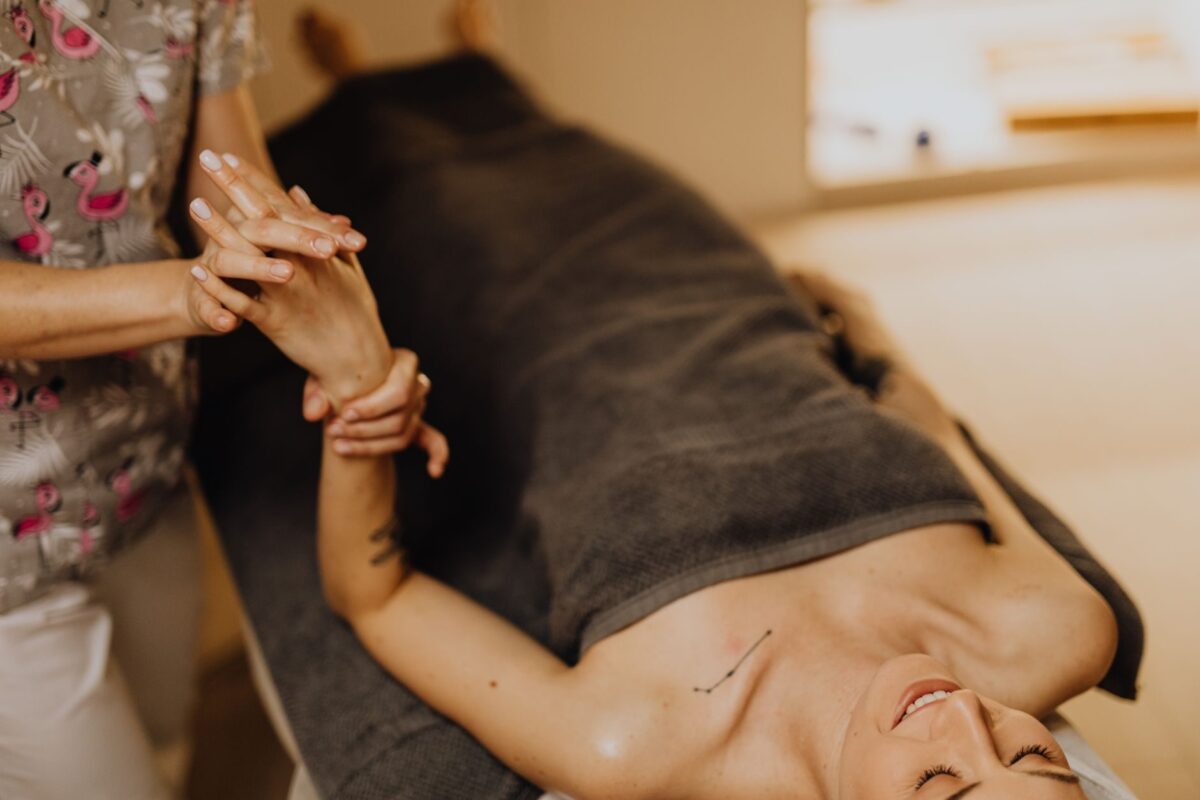
You stay clothed and lie on a table, a floor mat or sit in a chair. After a short conversation about why you have come and any health conditions, the practitioner locates points by anatomical landmarks and applies steady pressure with a thumb pad, fingertip, knuckle or palm, holding briefly before moving on. Sessions usually run 30 to 60 minutes and may include broad stroking or gentle stretching between points. Nothing should feel sharp; a dull, local, tolerable ache at the point is the sensation most practitioners aim for.
Pressing a point should never produce an electric or shooting feeling, numbness in a limb, or a sensation that spreads down an arm or leg. If it does, say so and the practitioner should move away immediately.
What the research shows
The most studied single point is Neiguan (PC6 or P6) on the inner wrist, the spot that travel-sickness wristbands press. Cochrane reviews of trials in people having surgery found that stimulating PC6 reduced post-operative nausea and vomiting compared with sham treatment, with the latest update (evidence to June 2025) finding that it may reduce nausea and vomiting when used alongside anti-sickness drugs, while rating confidence in the evidence as generally low. Evidence for other points and other conditions is thinner and of lower quality. In short, there is a real signal for nausea, and open questions elsewhere.
Who tends to choose acupressure
It attracts people who want firm, specific contact but prefer to stay clothed, those curious about Chinese or Japanese traditions, people who cannot or do not want to have needles, and anyone who enjoys the structure of a point-based session. If you want long flowing strokes with oil, compare the options in our massage comparison guide.
Suitability, contraindications and red flags
Acupressure is generally low-risk, but point pressure is still pressure. Avoid it over bruises, broken skin, varicose veins, fractures or recent surgery, and seek advice first if you have a bleeding disorder, take anticoagulants, have osteoporosis, or are being treated for cancer. Some points are traditionally avoided in pregnancy; do not follow online point “recipes” while pregnant, and tell any practitioner you are expecting. Pressing on the front or sides of the neck, over the throat or the carotid area, is never appropriate in self-care. Fever, acute infection and contagious skin conditions are reasons to postpone.
Stop and seek assessment if you feel faint, develop tingling or weakness in a limb, or a point remains painful after the pressure is released.
Learning gentle point pressure at home
You can feel what graded pressure is like on your own forearm without any chart:
- Rest one forearm, palm up, on a table. Use the thumb pad of the other hand, never the nail.
- Choose a fleshy spot in the middle of the forearm, away from the wrist crease and the elbow.
- Press in slowly, hold briefly, and ease off just as slowly. Aim for a dull, local sensation that stays mild and never tips into pain.
- Repeat a few times, then stop; keep the whole exercise brief and light, and end it at once if it feels uncomfortable. (This is a cautious first attempt, not a clinical protocol.)
- Do not press on the neck, throat, face, abdomen, inside of the knee, or any bony prominence.
That is the full extent of what this guide teaches. A fuller hands-only routine is in our five-minute hand and palm massage, and the limits of neck work are explained in neck self-massage: what is safe at home. Do not use pressure points to manage an unexplained symptom, or to put off having it assessed; get it looked at first.
Frequently asked questions
Is acupressure the same as acupuncture?
It shares the point map but not the method: acupuncture inserts fine needles and is a regulated profession in most countries, whereas acupressure uses only hands.
How does it differ from shiatsu?
Shiatsu is a Japanese system that grew out of the same roots; it uses palms and thumbs along whole channels, usually with stretches, and has its own training routes. Acupressure as a term is broader and less standardised.
Can a point chart tell me what is wrong with me?
No; a tender point is a tender point. Traditional labels are not a diagnosis, and persistent symptoms need a clinician.
Do the wristbands work?
For nausea around surgery the evidence is reasonable; for seasickness and pregnancy sickness it is weaker, though the bands are harmless to try.
Educational information, not medical advice. For actual pain, persistent or unexplained symptoms, injury, or anything that worries you, seek assessment from a qualified health professional before trying or receiving massage. Stop any technique that causes pain.
Sources
- Cochrane Database of Systematic Reviews, “Stimulation of the wrist acupuncture point PC6 for preventing postoperative nausea and vomiting”, Lee et al., 2015 and network meta-analysis update, 2025
- U.S. National Library of Medicine, MeSH descriptor “Acupressure” (definition)
- Encyclopaedia.com / Gale, “Acupressure” (overview of meridian theory and status as complementary medicine)
- Wikipedia (and cited references), “Shiatsu”: Tamai Tempaku 1919, Tokujiro Namikoshi, anma and tui na lineage
- Journal of the University of Phayao (Thailand), “The art and sciences of Tuina: from past to present” (Huangdi Neijing and anmo)
- National Center for Complementary and Integrative Health (USA), “Massage therapy: what you need to know”, 2019

 English
 French