
Style
Facial massage: light strokes, honest expectations and when to wait
Oct
Facial massage uses very light external strokes over the face, and sometimes the scalp and neck, with clean hands or a smooth tool. It belongs to two overlapping worlds: skincare, where it is part of a facial treatment, and bodywork, where it may close a head, neck and shoulder session. The muscles involved sit just beneath the skin, which is why the pressure is light and why the technique is easy to learn badly. This guide explains the traditions behind it, what a treatment includes, the skin and procedure cautions that matter, and what it can and cannot do.
Traditions behind the facial
Several strands feed modern practice. The salon “classic facial”, with cleansing, steam and a manual massage stage, developed within twentieth-century beauty therapy in Europe and North America, and most salon training worldwide still follows that sequence. In East Asia, gua sha (scraping the skin with a smooth tool) is a centuries-old body treatment in Chinese medicine; its application to the face with light strokes and jade or stone tools is mostly a twenty-first-century development that spread internationally through social media from around 2017, and historians note very little record of cosmetic scraping before then. Marketing sometimes attaches precise ancient dates to particular named methods; where we could not verify them in independent sources, they are left out here.
What a treatment involves
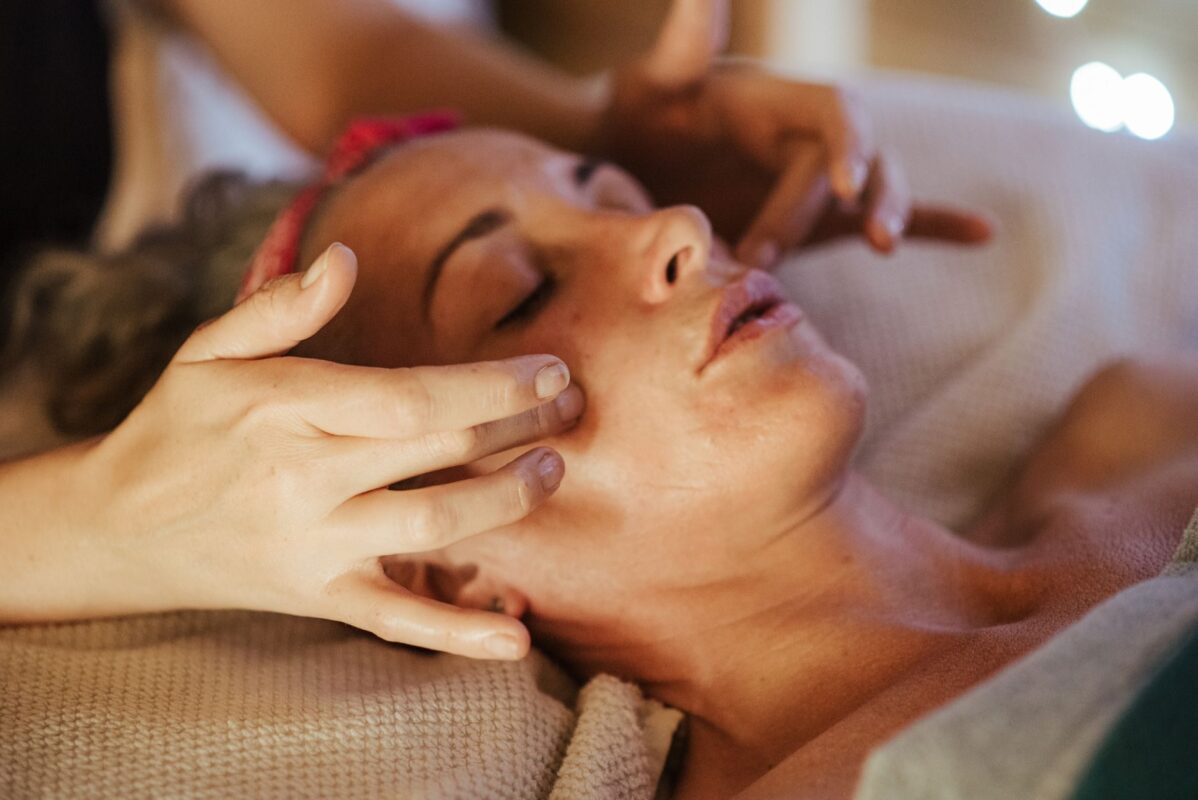
A facial massage rarely stands alone. In a salon it comes after cleansing and before a mask, lasting ten to twenty minutes; in a massage clinic it is a short close to a head or upper-body session. The therapist uses a light oil, balm or cream, and works with finger pads in small circles and upward sweeps across the forehead, temples, cheeks and jaw, light draining strokes down the sides of the neck, and sometimes gentle pressure at the temples and the hinge of the jaw. Tools, if used, should be clean (ideally disinfected between clients) and moved with the pressure of a fingertip, not scraped.
A short consultation matters more here than people expect: recent cosmetic injections, skin conditions, cold sores, retinoid use, and any jaw pain or clicking all change what the therapist should do.
Key techniques
- Effleurage of the face: feather-light sweeps from the centre outward and upward.
- Small circles over the cheeks and forehead with finger pads.
- Light draining strokes along the jawline and down the neck towards the collarbones.
- Gentle holds at the temples or the angle of the jaw, never pushing into the eye socket.
- Tool work (rollers, gua sha stones) with minimal pressure, where the client wants it.
The structures being touched are superficial: the orbicularis oris around the mouth, the zygomaticus muscles that lift the corners of the mouth, orbicularis oculi around the eyes, and the masseter and temporalis that close the jaw are all within a fingertip of the surface. Nothing in a facial needs force.
Who tends to choose it
People who enjoy the ritual of skincare, people with tension in the jaw or temples from clenching, anyone adding it to a head or neck session, and people looking for a non-invasive alternative to cosmetic treatments. The last group needs the clearest expectations: a facial massage can leave skin flushed, plumper-looking and relaxed for a short while, and it does not lift, tighten or permanently change anything.
Suitability, contraindications and red flags
- Dermal fillers and botulinum injections. Pressure over a treated area can shift filler or spread toxin; the American Society of Plastic Surgeons advises against rubbing or massaging treated areas after botulinum treatment, and how long to wait depends on the product and the clinic. Follow your injector’s instructions on when massage can resume, and tell the therapist exactly what was done and when.
- Recent procedures. Peels, laser, microneedling, threads or surgery: wait until your practitioner has cleared you.
- Cold sores. The herpes simplex virus spreads by skin contact, including when a sore looks dry; postpone until fully healed, and expect a therapist to decline if they see one.
- Acne, rosacea and retinoid-treated skin. Friction and oils can worsen inflammation and irritate skin made fragile by retinoids; ask for a very light, product-free touch or wait.
- Infection, broken skin, sunburn, eczema flare. Wait.
- Jaw pain, clicking or locking. This is not something to rub harder; it needs assessment, and only external, gentle contact is appropriate until then.
- Tool hygiene. Rollers and stones used on several faces must be disinfected; ask.
Stop if the skin stings, heat or swelling appears, or if any pressure near the jaw or temple causes sharp pain or a headache. Facial massage should never stand in for having a skin change or jaw symptom assessed properly.
Learning a light routine at home
This is one of the safer self-massage areas provided you keep the pressure trivial and the eyes out of it:
- Wash hands and face. Use a little plain moisturiser or oil you already tolerate.
- With the pads of the ring fingers, make slow small circles on the cheeks, then sweep from the centre of the forehead out to the temples a few times.
- Glide from the chin along the jawline to just below the ears, then down the sides of the neck to the collarbones a few times.
- Keep at least a finger’s width from the eyes and never press into the socket. Avoid any spot that is sore, spotty or healing.
- Keep the whole routine brief, and stop as soon as the skin feels warm or you have had enough.
Skip it entirely on days with a cold sore, an acne flare or recent injections. For how a small routine like this fits into a wider habit, see everyday self-care habits and the general principles in learning massage safely.
Frequently asked questions
Will facial massage permanently lift my face?
No; there is no good evidence that massage lifts or tightens skin, and any visible change is short-lived.
Is gua sha safe at home?
With a clean tool, light pressure and healthy skin it is low-risk, but the firm scraping used on the body in Chinese medicine is not appropriate on the face.
Can it help a clenched jaw?
Gentle external contact over the jaw muscles can feel relieving for a while; persistent jaw pain, clicking or locking should be assessed rather than massaged.
How soon after Botox or filler?
Ask the person who injected you; the interval depends on the product and the clinic, and the therapist will want to know either way.
Educational information, not medical advice. For actual pain, persistent or unexplained symptoms, injury, or anything that worries you, seek assessment from a qualified health professional before trying or receiving massage. Stop any technique that causes pain.
Sources
- Cleveland Clinic (USA), “Facial muscles” (anatomy of orbicularis oris, zygomaticus, masseter, temporalis and related muscles beneath the skin)
- Cecily Braden (USA) and Bustle, histories of gua sha (body practice in Chinese medicine; facial use largely twenty-first century)
- Mayo Clinic (USA), “Cold sores: symptoms and causes” (spread by skin contact)
- American Academy of Dermatology (USA), guidance on avoiding skin-to-skin contact with an active cold sore
- American Society of Plastic Surgeons (USA), “Botulinum toxin: recovery”, accessed October 2026 (do not rub or massage treated areas; no interval stated)
- Aesthetic clinic aftercare instructions (Australia, UK, USA) on avoiding massage over dermal filler and botulinum-treated areas, 2019–2023 (intervals vary by product and clinic)
- Cleveland Clinic (USA), “Jaw popping” (when jaw symptoms need assessment)

 English
 French